
"sweet bitter sour salty"
200 article(s) found
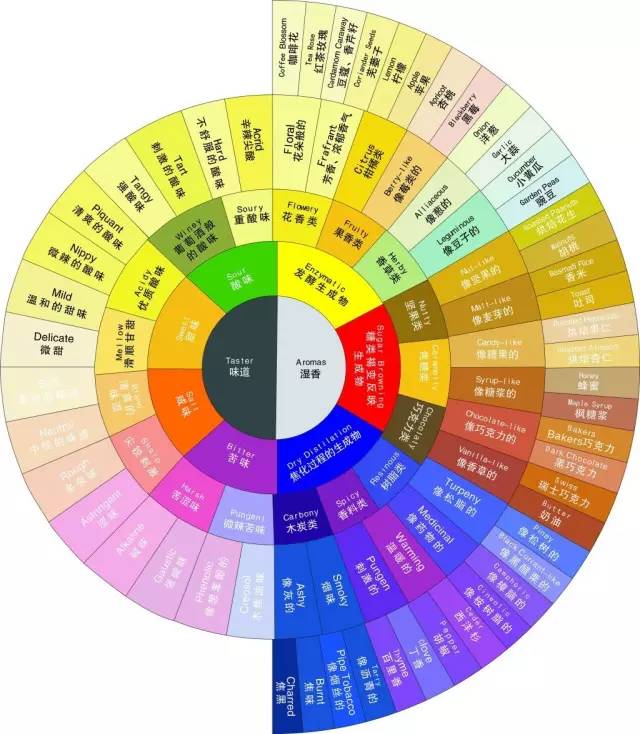
Coffee flavor wheel: bitter and salty, sour and sweet
Following Cafe Review (Wechat official account vdailycom) found that coffee has only four water-soluble tastes: sour, sweet, bitter and salty, so the taste spectrum is not as complicated as the smell spectrum described in the previous chapter. Some sour and new aromatic compounds are only volatile and need to be identified by aversion, while others are not volatile, only water soluble, and need to be identified by taste buds.

Why is the coffee salty? Is the bitter and salty coffee really a bad flavor?
Why is the coffee salty? Is the bitter and salty coffee really a bad flavor? With regard to the bitterness and saltiness of the five basic flavors, although these two flavors are the most familiar in life, they are worth talking about in the field of coffee. For example, does good coffee have to have no bitter taste? Why do you sometimes get salty taste in coffee? Next, we...

SCAA Coffee Flavor Wheel learns the sour, sweet, bitter and salty of coffee
What is the best overall taste, and what is the appropriate ratio of sour to bitter taste? these all need to be adjusted according to individual tastes. If they are cooked for others, beans should be selected according to the preferences of coffee drinkers. Change the hot water temperature, extraction time and grinding degree, to find the best value. The taste of coffee roasted from light to medium is low molecular weight and middle molecular weight.
Learning essentials of SCAA Coffee Flavor Wheel the origin of coffee flavor wheel
Coffee has only four kinds of water-soluble tastes: sour, sweet, bitter and salty, some sour and sweet, only volatile, which need to be identified by smell; some are non-volatile, only water-soluble, and need to be identified by taste buds; and some sweet and sour ingredients are both volatile and water-soluble, so sour and sweet often show the dual senses of smell and taste. As for bitterness and saltiness, there is no volatility.

Why do we get salty when we drink coffee? Like some plum vegetables, do you have meat?
Professional coffee knowledge exchange more coffee bean information please follow the coffee workshop (Wechat official account cafe_style) I do not know if you have ever encountered such a thing, when tasting coffee will taste salty. Only heard of coffee contains sour, sweet, bitter these three kinds of taste, in fact, coffee is not only bitter, sour, sweet, but also salty, the four flavors inhibit each other and balance each other. And the sweet is

The main points of the knowledge of coffee flavor wheel: a detailed analysis of the learning essentials of SCAA coffee flavor wheel
Coffee has only four kinds of water-soluble tastes: sour, sweet, bitter and salty, some sour and sweet, only volatile, which need to be identified by smell; some are non-volatile, only water-soluble, and need to be identified by taste buds; and some sweet and sour ingredients are both volatile and water-soluble, so sour and sweet often show the dual senses of smell and taste. As for bitterness and saltiness, there is no volatility.

Where does the salty taste of coffee come from? Why does espresso taste a little salty?
Professional coffee knowledge exchange more coffee bean information Please pay attention to the coffee workshop (Wechat official account cafe_style) sometimes a cup of coffee actually a little salty taste is their own taste disorders or coffee problems? In fact, coffee is not only bitter, but also sour, sweet and salty. The four flavors restrain each other and balance each other. And the position of sweet in a cup of coffee is still

Why does the coffee taste salty? How does the salty taste of coffee come from?
As we all know, there are four basic flavors of coffee, namely, sweet, salty, sour and bitter, and the one that sums up this basic taste is SCAA. Many friends who first came into contact with coffee reported that I could not drink it salty.

Have you ever tasted the five basic flavors of coffee: sweet, sour, bitter, salty and fresh?
Professional coffee knowledge exchange more coffee bean information please follow the coffee workshop (Wechat official account cafe_style) the basic taste of coffee is divided into sweet, sour, bitter, salty and fresh. The following front street coffee will introduce these five basic flavors. [sweet] We usually use [sweet] to describe the taste of sucrose, commonly known as sugar, which is generally recognized as sweet and delicious. Although sugar is the purest sweetest

Introduction to Fine Coffee--How to Taste Fine Coffee Sweet, Sour, Bitter, Salty What Flavors Fine Coffee Has
The above means that beginner players do not need to pay too much attention to subtle flavors and aromas. What do you need to focus on? My advice is to start with basic tastes: sour, sweet, bitter, salty. And it's both the consumer's and the baker's. However, this is undoubtedly a vicious circle. The final result will only raise the entry barrier for fine coffee and lose a large number of potential consumers in vain.

What is the relationship between coffee sour, sweet, salty and bitter and roasting-an introduction to the blending of Italian coffee
What is the relationship between coffee sour, sweet, salty and bitter and roasting-espresso blending introduces the bitterness of ① moderate roasting (chlorogenic acid lactone) and ② deep baking bitterness (vinyl catechol oligomer). ① is the so-called authentic bitterness of coffee; ② is the bitterness of deep-roasted coffee such as espresso. Therefore, medium and deep baking is an intermediate flavor between ① and ②.

Why is there salty coffee in my coffee? why is the coffee salty?
Professional coffee knowledge exchange more coffee bean information Please pay attention to the coffee workshop (Wechat official account cafe_style) Coffee not only has a bitter taste, but also has a rich sour taste to set off the sweet taste of coffee, the aroma of coffee has the dry aroma of roasted or ground, the wet aroma of coffee extract, this aroma can stabilize people's mood and improve sensory sensitivity. The more you learn about it,
popular science| How do you taste all that stuff in coffee? About the cup test.
Professional barista communication Please pay attention to coffee workshop (Weixin Official Accounts cafe_style ) Although you often see the flavor description of coffee beans, there are still people who are confused about what these tastes are. So let's talk about those things about cup test (cup taste) coffee today. We should distinguish the flavor, body, acidity and wet aroma of coffee.

Coffee extracted by SCAA Gold Cup identifies the distribution of sour, sweet, bitter and salty on the tip of the tongue
Since the data is not important, what is important? The effect of extraction rate on taste, of course. When you have a thorough understanding of the relationship between the extraction rate and the taste trend, it will definitely be of great help to your cooking adjustment. Let's take a look at this diagram. The data of vertical axis and horizontal axis are removed and replaced by the relationship between concentration taste and extraction rate taste. When coffee

The relationship between sour, sweet, salty and bitter coffee and baking
The relationship between coffee sour, sweet, salty and bitter and roasting coffee essence. There are two categories: volatile aroma components [basically aliphatic and benzoic acid, phenylacetic acid] and weakly volatile or non-volatile acids [affecting the taste quality of coffee]. Volatile acids: volatile acids are produced during the thermal degradation of sugars, mainly glucose, which is heated to formic acid and acetic acid.

How to use coffee flavor wheel-how to understand coffee flavor wheel
How to use coffee flavor wheel-how to understand the percentage of coffee flavor wheel to express the weight ratio of each flavor component to coffee soluble matter the above data are the weight proportion of sour, sweet, bitter and salty soluble flavor of coffee ripe beans, obviously the most sweet ingredients, accounting for 39% of the soluble matter, followed by bitter matter 264%, salty taste 4% ranked third, sour accounted for the lowest, no more than 54%, the total
Want to drink coffee but too bitter, add sugar and afraid of high calories? Try adding a pinch of salt.
Follow the caf é (Wechat official account vdailycom) found that the beautiful cafe opened a small shop of its own, but it is bitter to drink coffee, sugar and afraid of high calories? Maybe you can try to add a pinch of salt to not only reduce the bitterness, but also make the coffee more mellow. This secret recipe comes from a study published in the British journal Nature, which says that sodium ions in salt can inhibit bitterness and increase bitterness.

What does the Caribbean taste like? Sweet? Salty? Sour? Or bitter?
What does the Caribbean taste like? Sweet? Salty? Sour? Or bitter? Sometimes the tongue is a key that opens the space between memory and imagination. For example, about the taste of the Caribbean, it starts with the cup of Puerto Rican coffee in the leisure afternoon. In the afternoon, the Qiaoman Cafe was quiet and elegant, and the sun sprinkled on the gray-green wall tiles through the thick branches and leaves. This hide

The basic taste of coffee The growing environment of coffee trees
Taste is the sensation of taste. Sensory organs are located in a mucus-coated membrane on the tongue. Its irritant consists of soluble compounds. The four basic coffee flavors that people can distinguish are sweet, salty, sour and bitter. Sweet is characterized by sugar, alcohol, and certain acidic solutions. Sweetness is mainly felt by fungiform papillae at the tip of the tongue

Official training basic knowledge tongue taste area distribution map sweet, salty, sour, bitter professional coffee
Taste refers to the ability to sense the taste of substances, including the taste of food, certain minerals and toxic substances, which is a near sense compared with the sense of smell, which is also chemically induced. Western experts traditionally use taste maps, coffee and red wine tastings. Taste refers to the ability to feel the taste of substances, including food, certain minerals, and